The Disabled Facilities Grant (DFG) is a statutory, means-tested grant designed to fund essential home adaptations. Its purpose is to make it easier for you to care for a disabled family member or to help them live more independently within their own home—or yours. (1)
This case study highlights how targeted adaptations can serve as a cornerstone of a broader preventative care strategy, enabling disabled individuals to remain safe and self-sufficient in a familiar environment.
The case study demonstrates how the garden adaptation enhances tactile cues, safety, and sensory engagement through the use of rubber safety flooring.
It features a full home adaptation for a blind and autistic adult, including internal modifications, front access improvements, and garden enhancements.
The project was shortlisted for the Excellence in Design category at the National Healthy Housing Awards 2021.
______________________________
(1) Housing Grants and Assistance Policy 2024
AUTHORED By Susana Silva BA(Hons)Arch, ARB, RIBA
INTRODUCTION
Designing a Safe Garden , a secure and sensory-rich garden environment for a blind individual requires careful planning, with a strong emphasis on tactile navigation, safety, and therapeutic engagement.
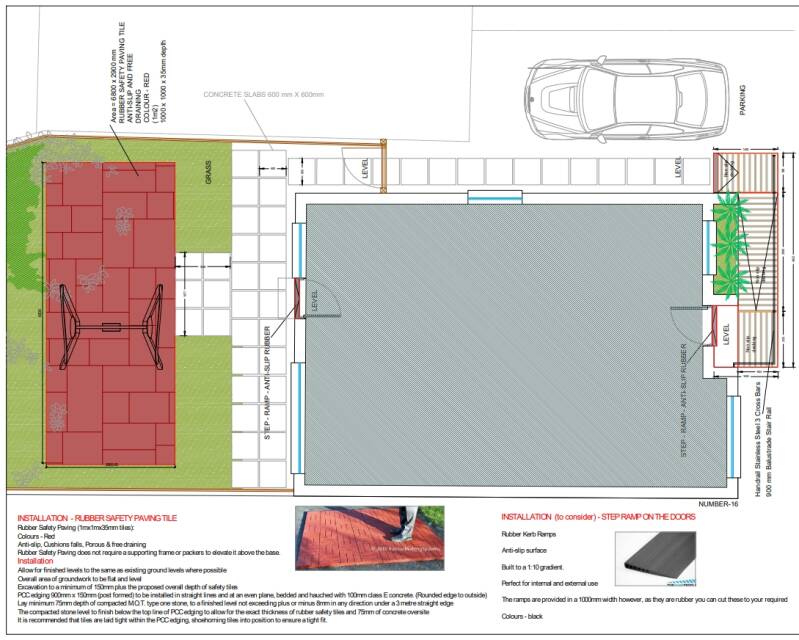
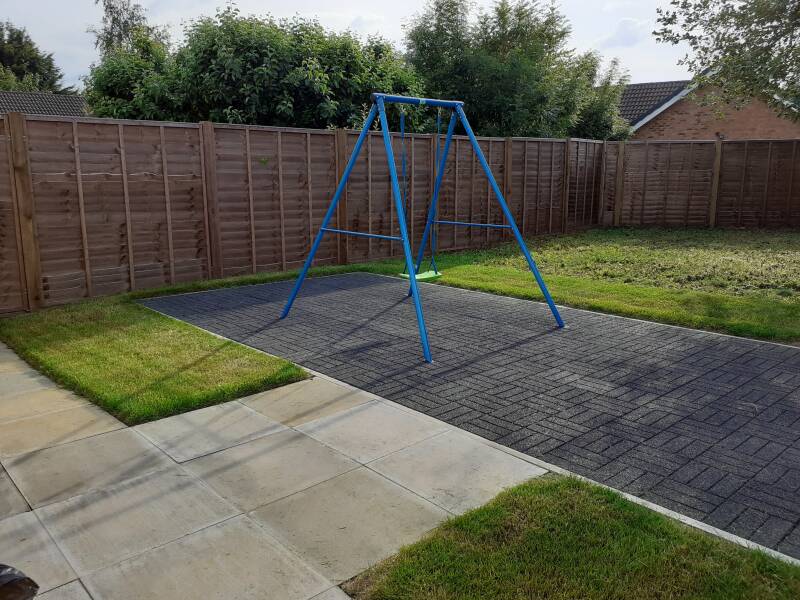
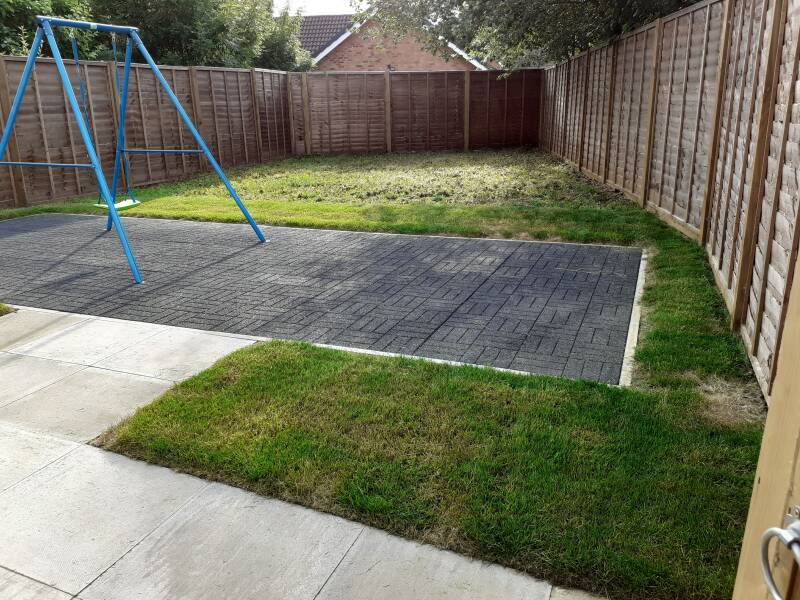
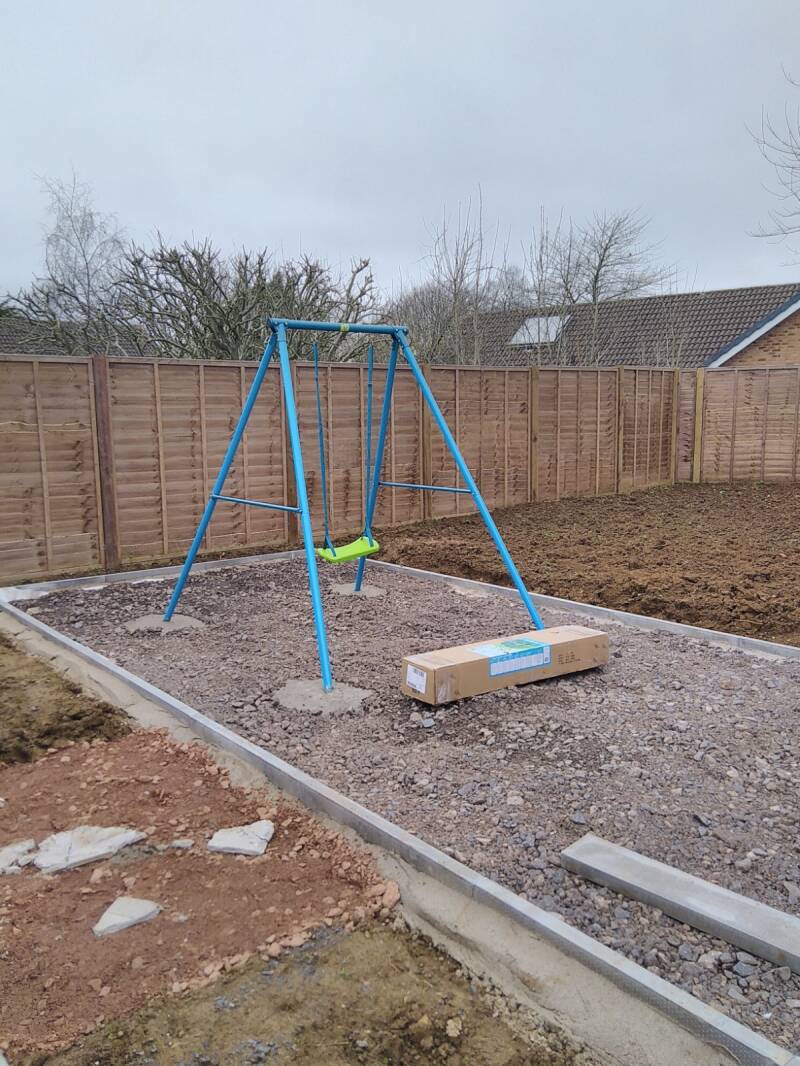
In this case, the client requested the installation of a therapeutic swing in an outdoor setting. To accommodate this, a dedicated hard-paved area was designed with precise dimensions to ensure optimal placement and accessibility within the garden.
Respecting altimetric measurements was important to eliminate any uneven surfaces, bumps, or small steps. This ensured smooth, hazard-free movement throughout the space, supporting independent mobility and reducing the risk of trips or falls.
SOLUTION
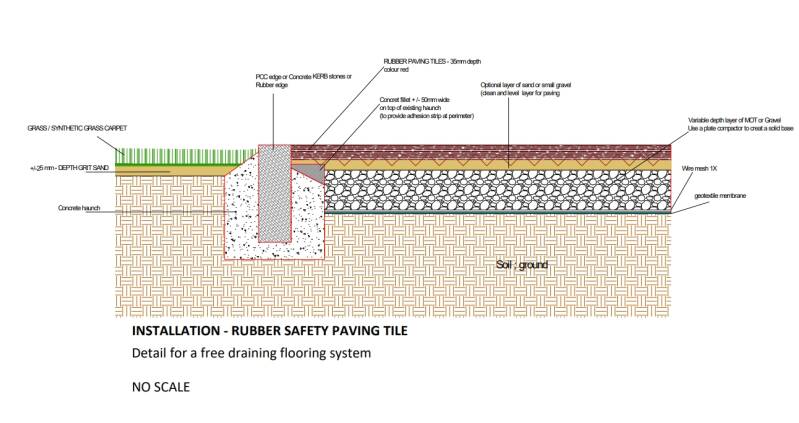
Rubber Safety Paving (1mx1mx35mm tiles) Anti-slip, Cushions falls, Porous & free draining (deckingni.co.uk) was selected as the foundational surface due to its:
- Rubber Safety Paving does not require a supporting frame or packers to elevate it above the base.
-
Non-slip texture for secure footing
-
Impact-absorbing properties to cushion falls
-
Low-maintenance nature, ideal for outdoor use
When choosing interlocking rubber tiles, the following features were prioritized:
-
Safety Flooring Features
-
Seamless, trip-free surfaces
-
Cushioning in case of falls
-
Effective drainage to prevent puddling
-
-
Material Durability
-
UV-resistant and weatherproof materials to withstand outdoor conditions
-
Long-lasting performance with minimal upkeep
-
CHALLENGES
- Navigational Safety
Obstacle Elimination: Even minor bumps, uneven surfaces, or unexpected steps can pose serious tripping hazards.
Clear Pathways: Ensuring consistent, wide, and unobstructed route is essential for movement.
Tactile Guidance: Incorporating tactile cues in place by material selection (e.g., different textured surfaces).
- Sensory Engagement Without Overload
Balancing Stimuli: While textured surfaces enhance experience, too many stimuli can be overwhelming or confusing.
- Therapeutic Swing Integration
Structural Stability: The swing must be securely anchored to prevent tipping or excessive movement.
Safe Access: The approach to the swing should be smooth, with tactile indicators to signal proximity and orientation.
- Weatherproofing and Maintenance
Durability of Materials: Outdoor flooring must withstand rain, UV exposure, and temperature changes without degrading or becoming slippery.
Drainage: Poor drainage can lead to puddles, moss growth, or ice in colder months—all of which increase fall risk.
- User-Centred Design
Inclusive Collaboration: Engaging the client throughout the design process was essential to ensure the final garden space met the needs, preferences, and comfort. However, this posed a significant challenge: Blind individuals often cannot visualise spatial layouts or conceptualise design elements before physical completion. Traditional design tools like sketches, plans, or 3D models offer limited value without tactile or auditory equivalents. To overcome this, the design team explored alternative communication strategies, such as textured samples to convey layout and surface changes and descriptive walkthroughs using (interior - exterior) spatial language and sensory cues.
AUTHORED By Susana Silva BA(Hons)Arch, ARB, RIBA
Add comment
Comments